Immanuel KantLife · Work · Legacy
XGlossary

Glossary

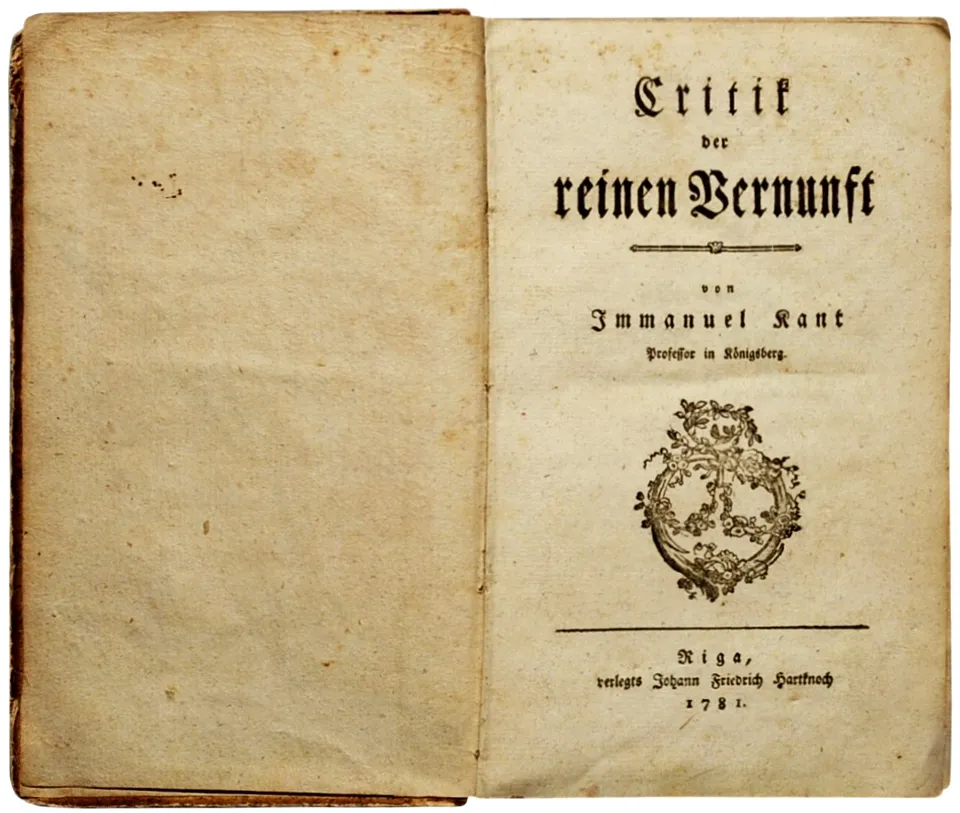
a priori / a posterioriImage: © Foto H.-P.Haack · CC BY-SA 3.0 · Wikimedia Commons
a priori / a posteriori

A priori knowledge is independent of all experience (e.g. mathematics); a posteriori knowledge derives from experience.

Read more →

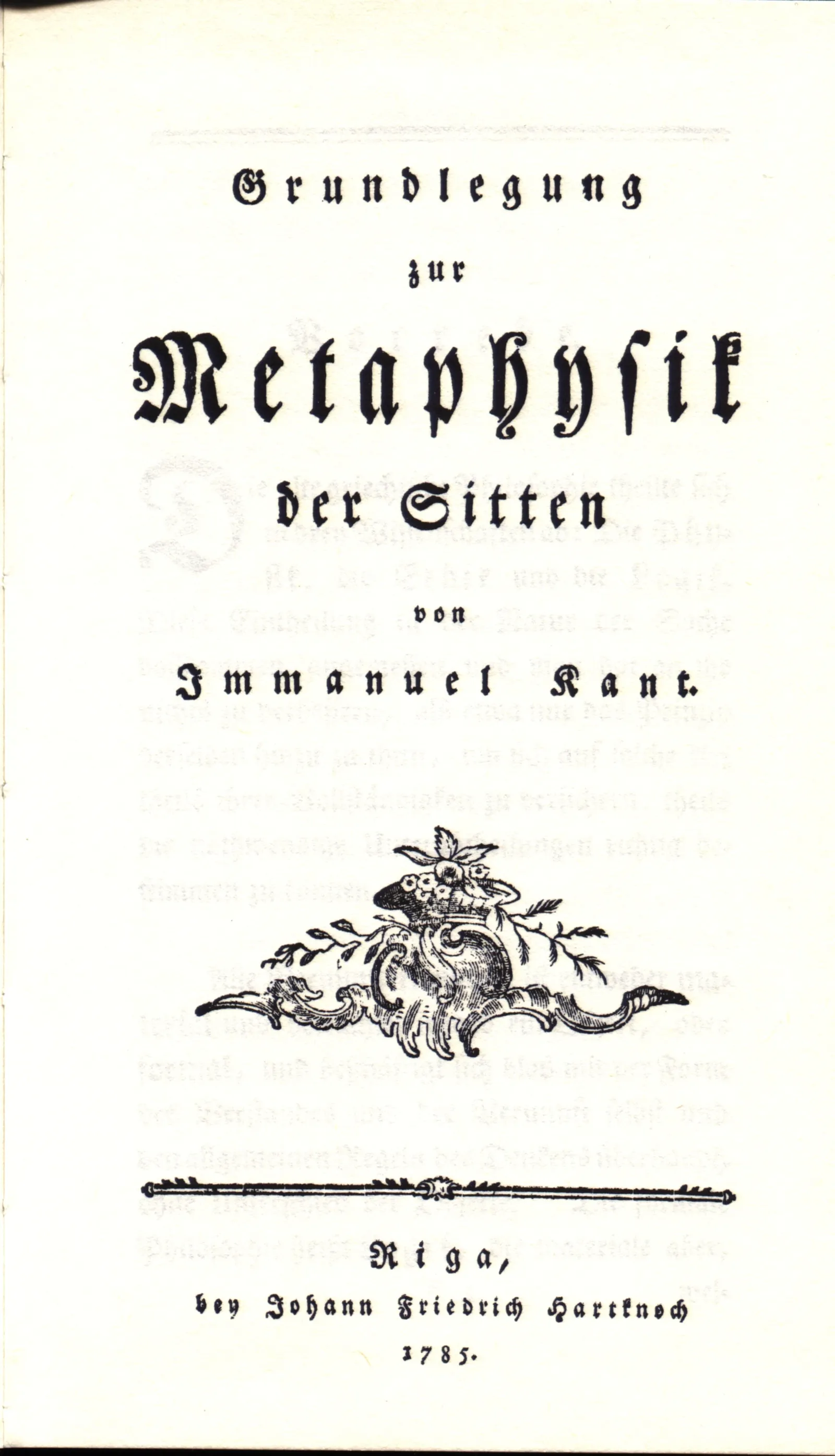
AntinomyImage: © Foto H.-P.Haack · CC BY-SA 3.0 · Wikimedia Commons
Antinomy

A conflict of reason with itself: thesis and antithesis can — on Kant's showing — be proved equally well: for him the alarm signal of a metaphysics that oversteps its bounds.

Read more →

Appearance

The object as it is given to us through space, time and the categories — the only thing we can know.

Read more →

AutonomyImage: Immanuel Kant · Public domain · Wikimedia Commons

Autonomy

Self-legislation of the will: free is whoever gives the moral law to themselves — instead of being determined by inclinations or authorities.

Read more →

Categorical imperativeImage: Immanuel Kant · Public domain · Wikimedia Commons

Categorical imperative

The supreme principle of Kantian ethics: “act only in accordance with that maxim through which you can at the same time will that it become a universal law.”

Read more →

Categories

The twelve pure concepts of the understanding (e.g. cause, substance, unity) by which the understanding structures all experience — prior to any experience.

Read more →

Copernican revolution (in philosophy)Image: © Foto H.-P.Haack · CC BY-SA 3.0 · Wikimedia Commons
Copernican revolution (in philosophy)

Kant's reversal of perspective: our cognition does not conform to objects — the objects of experience conform to our cognition.

Read more →

Cosmopolitan rightImage: Kant · Public domain · Wikimedia Commons

Cosmopolitan right

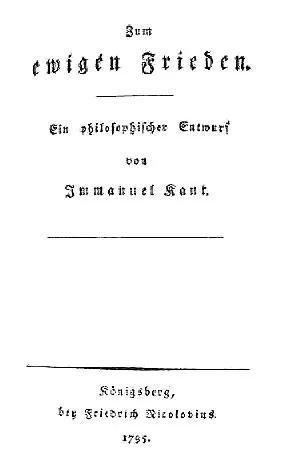
The third definitive article of “Perpetual Peace”: “Cosmopolitan right shall be limited to conditions of universal hospitality.”

Read more →

CritiqueImage: © Foto H.-P.Haack · CC BY-SA 3.0 · Wikimedia Commons

Critique

In Kant, critique does not mean fault-finding but examination: the inquiry into what a faculty can achieve and where its limits lie.

Read more →

Dignity

The absolute worth of the person: what has a price can be replaced — what has dignity admits of no equivalent.

Read more →

Duty

“Duty is the necessity of an action done out of respect for the law” — the core concept of Kantian ethics.

Read more →

Empiricism

The position that all knowledge ultimately derives from sense experience — held by Locke, Berkeley and Hume, among others.

Read more →

End in itself

Persons exist as ends in themselves: they have absolute worth and may never be used merely as means.

Read more →

EnlightenmentImage: unbekannt / unknown · Public domain · Wikimedia Commons
Enlightenment

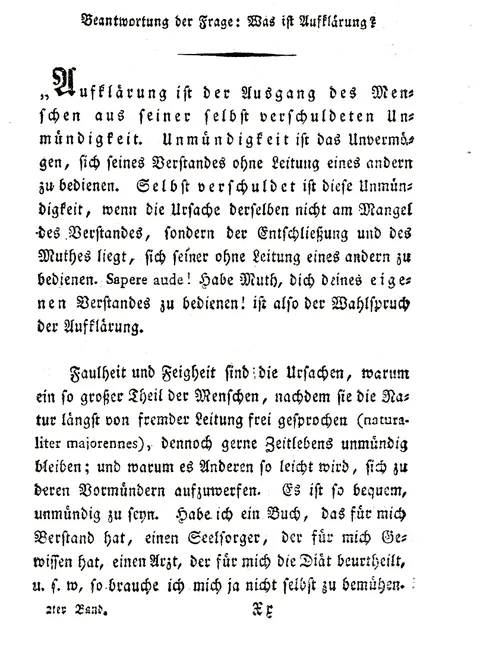
“Man's emergence from his self-incurred immaturity” — Kant's famous definition of 1784.

Read more →

GeniusImage: Immanuel Kant · Public domain · Wikimedia Commons
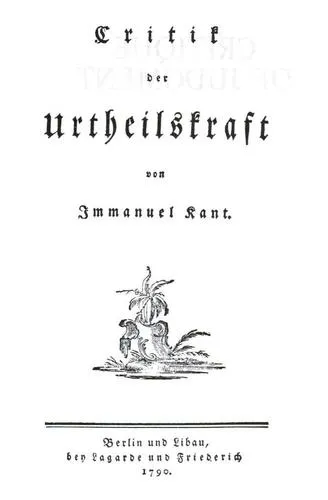
Genius

The inborn talent through which “nature gives the rule to art” — for Kant the origin of all fine art.

Read more →

Good willImage: Immanuel Kant · Public domain · Wikimedia Commons

Good will

The only thing that can be “regarded as good without limitation” — the famous opening claim of the first section of Kant's “Groundwork of the Metaphysics of Morals”.

Read more →

Heteronomy

Determination of the will from outside — the opposite of autonomy: the will is guided by inclinations, utility or external authorities.

Read more →

Highest goodImage: Immanuel Kant · Public domain · Wikimedia Commons

Highest good

The union of virtue and happiness: happiness in exact proportion to worthiness of it — for Kant the goal of pure practical reason.

Read more →

Hypothetical imperative

A conditional command: “If you want X, do Y.” It binds only as long as you will the end — unlike the categorical imperative.

Read more →

Intuition (Anschauung)

The immediate, sensible representation of a single object — for Kant the indispensable material source of all knowledge.

Read more →

Judgment

The basic operation of thought: the combination of representations in which a predicate is affirmed or denied of a subject.

Read more →

Judgment of tasteImage: Immanuel Kant · Public domain · Wikimedia Commons

Judgment of taste

The aesthetic judgment “this is beautiful”: its determining ground is subjective — a feeling — and yet it claims everyone's assent.

Read more →

Kingdom of endsImage: Immanuel Kant · Public domain · Wikimedia Commons

Kingdom of ends

Kant's thought-picture of a community of rational beings systematically united under common laws — each at once legislator and subject.

Read more →

MaturityImage: unbekannt / unknown · Public domain · Wikimedia Commons

Maturity

The ability to use one's own understanding without another's guidance — the goal of enlightenment.

Read more →

Maxim

The subjective principle of action — the personal rule on which someone actually acts.

Read more →

Metaphysics

The fundamental philosophical discipline of ultimate questions — God, freedom, the soul, the world as a whole. Kant examines whether it can ever become a science.

Read more →

Moral lawImage: Immanuel Kant · Public domain · Wikimedia Commons

Moral law

The fundamental law of pure practical reason: it commands acting only on maxims fit to serve as universal legislation.

Read more →

Noumenon

A mere object of thought: the concept of an object that would be not sensed but only thought — in Kant a boundary concept of cognition.

Read more →

Postulates of practical reasonImage: Immanuel Kant · Public domain · Wikimedia Commons

Postulates of practical reason

Freedom, the immortality of the soul and God: assumptions that practical reason demands, although theoretical knowledge of them is impossible.

Read more →

Rationalism

The position that secure knowledge stems primarily from pure thought — classically in Descartes, Spinoza and Leibniz.

Read more →

Reason

The highest faculty of cognition: it draws inferences, forms ideas of the unconditioned (soul, world, God) and, as practical reason, gives the will its law.

Read more →

Regulative idea

Ideas of reason such as soul, world and God yield no knowledge of objects — but as guiding threads they direct our inquiry and action.

Read more →

Sensibility

The receptive faculty of cognition: the capacity to be affected by objects and to receive intuitions — shaped by space and time.

Read more →

Space and time

For Kant neither things nor properties of things in themselves, but the pure forms of our sensible intuition: everything that appears to us appears in space and time.

Read more →

Synthetic / analyticImage: © Foto H.-P.Haack · CC BY-SA 3.0 · Wikimedia Commons

Synthetic / analytic

Analytic judgments merely unfold what is already contained in the concept; synthetic ones extend knowledge. Kant's guiding question: how are synthetic judgments a priori possible?

Read more →

The beautifulImage: Immanuel Kant · Public domain · Wikimedia Commons

The beautiful

According to the “Critique of Judgment”, the beautiful is what pleases universally, without interest and without a concept.

Read more →

The sublimeImage: Caspar David Friedrich · Public domain · Wikimedia Commons

The sublime

The sublime is “what is absolutely great”: nature's overwhelming size and might, in which we experience at once our powerlessness and our vocation as rational beings.

Read more →

Thing in itselfImage: © Foto H.-P.Haack · CC BY-SA 3.0 · Wikimedia Commons

Thing in itself

Reality as it is independently of our cognition — for Kant fundamentally unknowable; we only ever know appearances.

Read more →

Transcendental

Kant's method: inquiry into the conditions of the possibility of knowledge — not to be confused with “transcendent” (otherworldly).

Read more →

Understanding

The faculty of concepts and rules: the understanding actively combines what is given in sense into judgments and thus into knowledge.

Read more →