Highest good
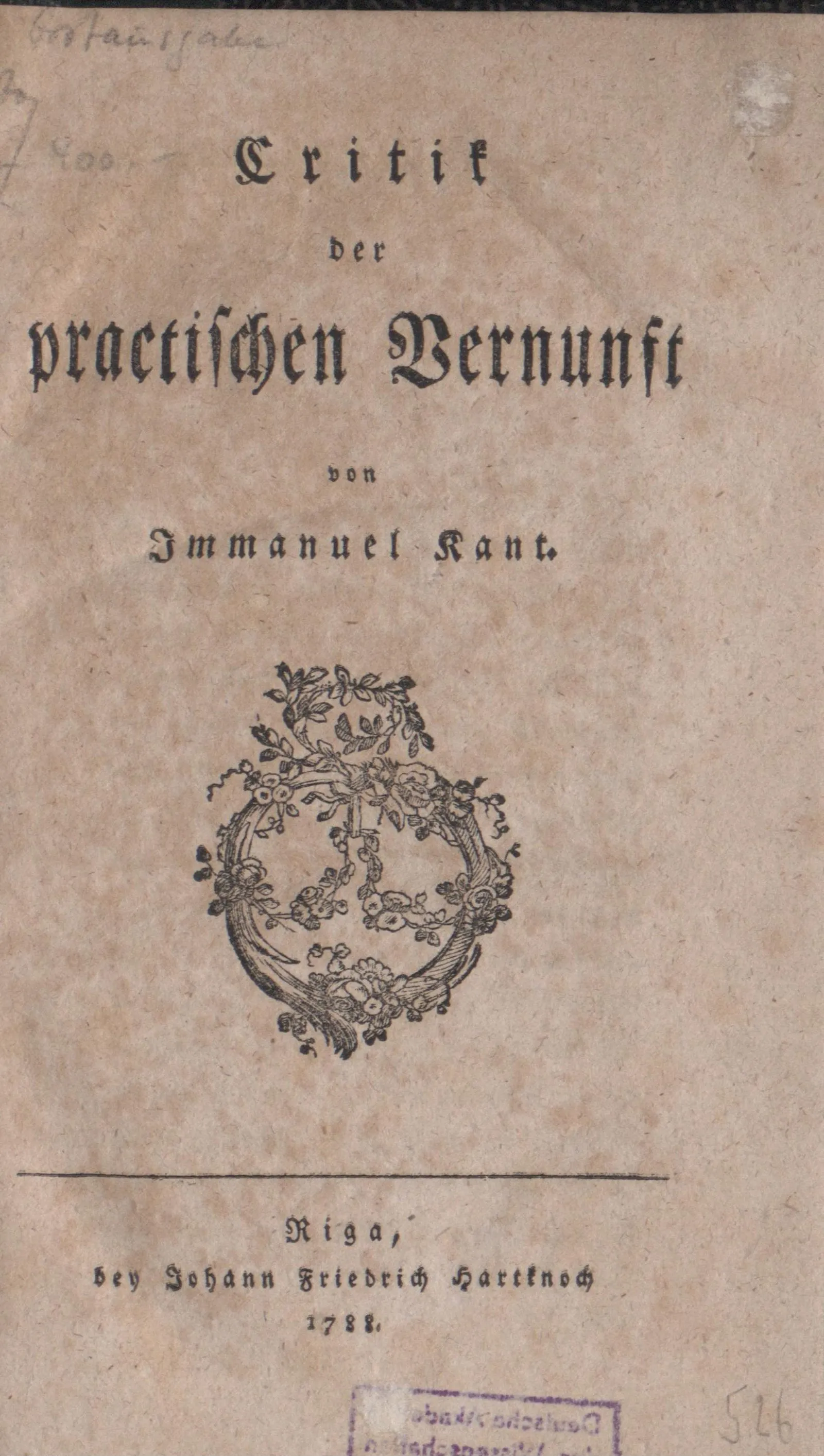
The union of virtue and happiness: happiness in exact proportion to worthiness of it — for Kant the goal of pure practical reason.
Antiquity argued about what the summum bonum consists in. The Stoics and the Epicureans, Kant says, followed the same method: both asserted an identity of virtue and happiness — the Stoic found happiness already in the consciousness of virtue, the Epicurean found virtue already in the prudent maxim of seeking happiness. For Kant, however, the two are “specifically quite different elements”: their connection is not analytic but synthetic. Virtue is the supreme good; the complete good also requires happiness in proportion to one's worthiness of it.
Yet in the world of experience, virtue and happiness plainly do not coincide. This tension leads Kant to the postulates of practical reason — God and immortality as the conditions under which the highest good remains thinkable and moral striving does not run into the void.
Where it appears
- Ethics — The Critique of Practical Reason
- The End of All Things — Structure & core theses
- Critique of Practical Reason — Structure & core ideas
- Hoping
- Hope — The highest good: worthy and happy
Source: Wikipedia: Highest good