Maxim Tester
Take Kant's own examples step by step through the test of the categorical imperative.
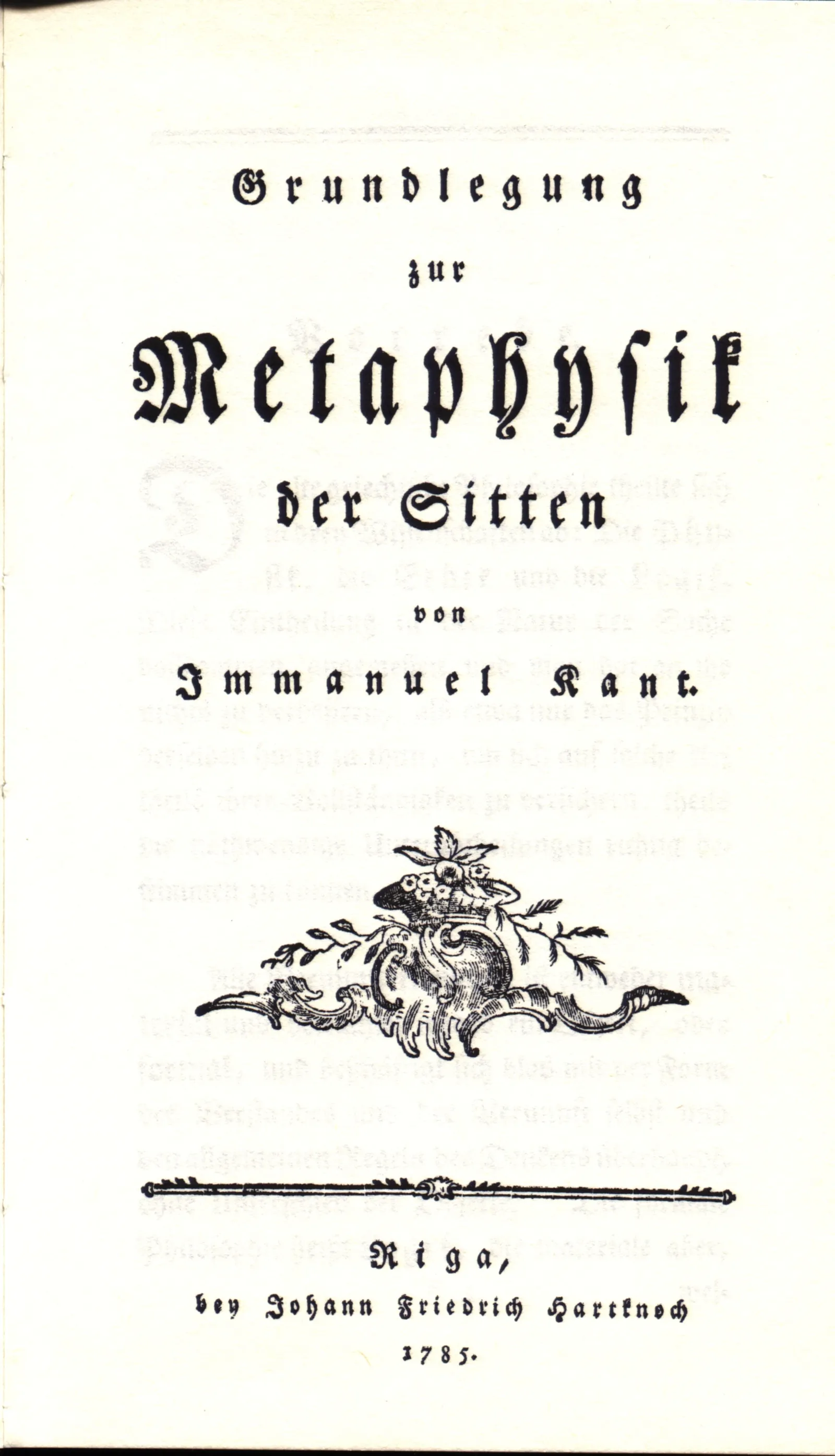
The supreme principle of Kantian ethics: “act only in accordance with that maxim through which you can at the same time will that it become a universal law.”
The categorical imperative commands unconditionally — unlike hypothetical imperatives, which only say: “If you want X, do Y.” Kant states it in several equivalent formulas, including the universal-law formula and the humanity formula (“act so that you treat humanity … always at the same time as an end, never merely as a means”).
Testing a maxim proceeds in two stages: can it be conceived without contradiction as a universal law? If it already fails here — like the false promise — the action violates a strict, perfect duty. If it can be conceived but not willed without contradiction — like the maxim of never helping others in need — it violates a wider, imperfect duty.