Flashcards
Review the concept with the Leitner flashcards — what you know comes back less often.
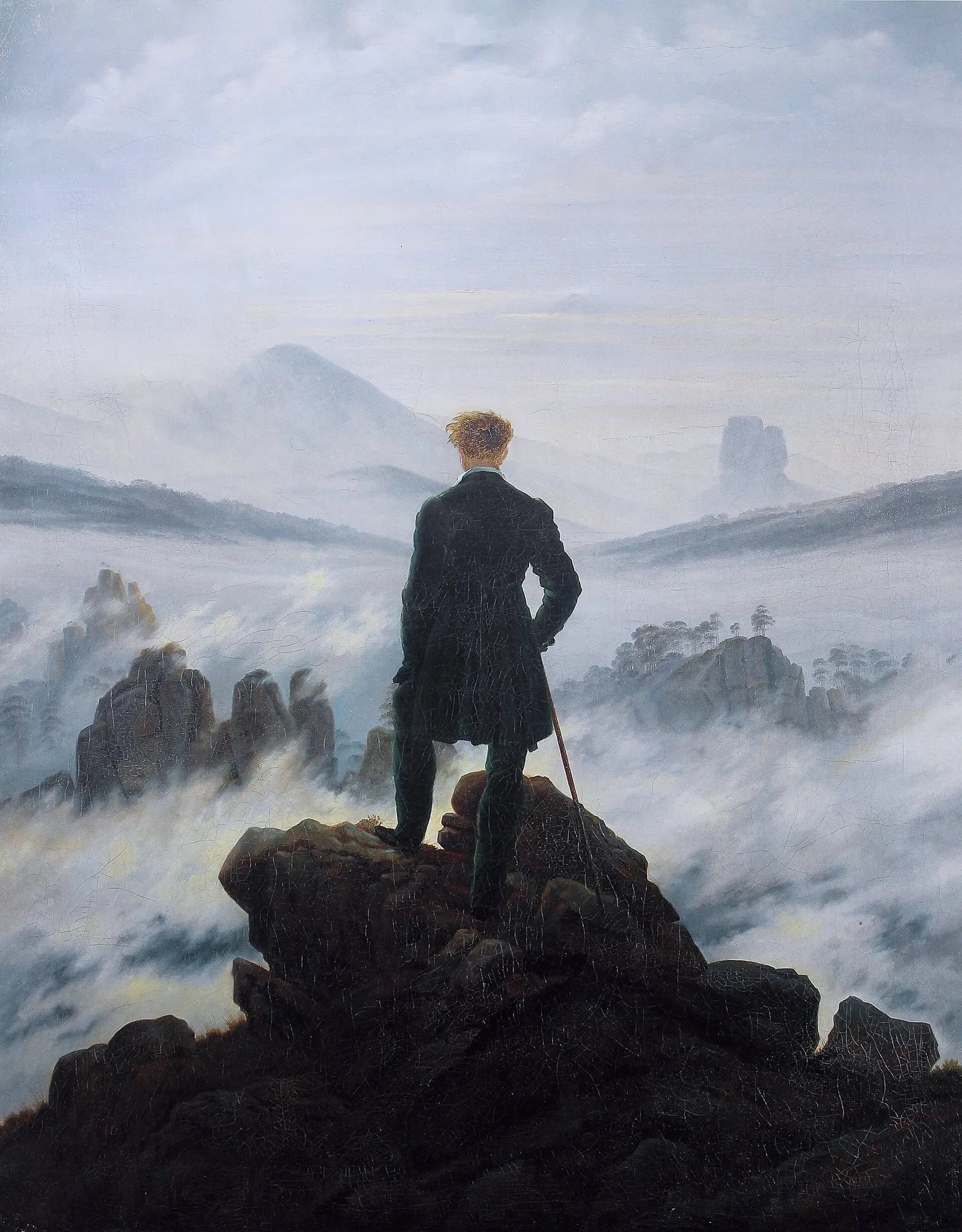
The sublime is “what is absolutely great”: nature's overwhelming size and might, in which we experience at once our powerlessness and our vocation as rational beings.
Kant distinguishes the mathematically sublime — the absolutely great, before which the imagination fails, such as the starry sky — from the dynamically sublime: overpowering nature, the storm-whipped ocean, thunderclouds over the mountains.
The sublime is therefore a mixed feeling: first a checking, then an outpouring of the vital powers. In the displeasure at our sensory powerlessness we discover a “supersensible faculty” within — our reason and moral vocation, which no force of nature can touch. Unlike the beautiful, the sublime pleases precisely through its resistance to the interest of the senses.
Source: Wikipedia: The sublime