Flashcards
Review the concept with the Leitner flashcards — what you know comes back less often.
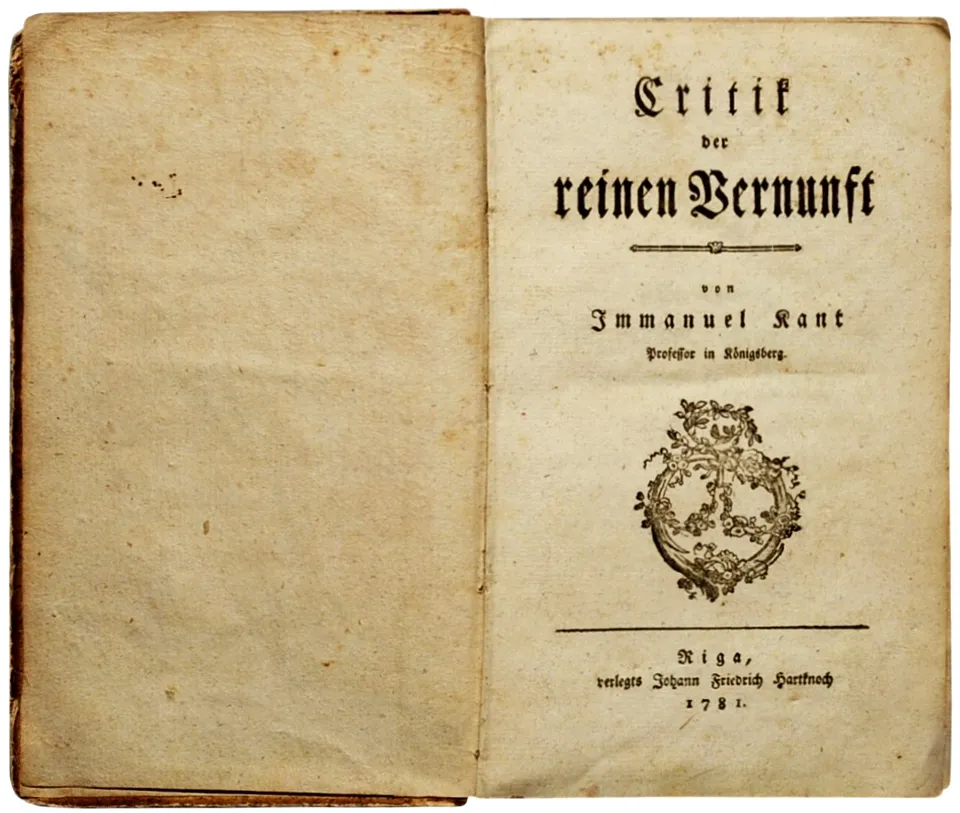
A conflict of reason with itself: thesis and antithesis can — on Kant's showing — be proved equally well: for him the alarm signal of a metaphysics that oversteps its bounds.
In the “Critique of Pure Reason” Kant presents four antinomies: does the world have a beginning in time and limits in space? Does matter consist of simple parts? Is there freedom alongside natural causality? Does a necessary being exist? For thesis and antithesis, Kant presents equally weighty proofs in each case.
Transcendental idealism supplies the resolution: the contradictions arise because reason treats the world as a whole like a thing in itself — whereas it is a mere idea of reason, not a possible object of experience. The resolution is asymmetrical: in the two mathematical antinomies (the first and second) both claims are false; in the two dynamical ones (the third and fourth) both can be true, in different respects — for instance natural necessity in the world of appearances, freedom in the intelligible realm.
Source: Wikipedia: Antinomy