Flashcards
Review the concept with the Leitner flashcards — what you know comes back less often.
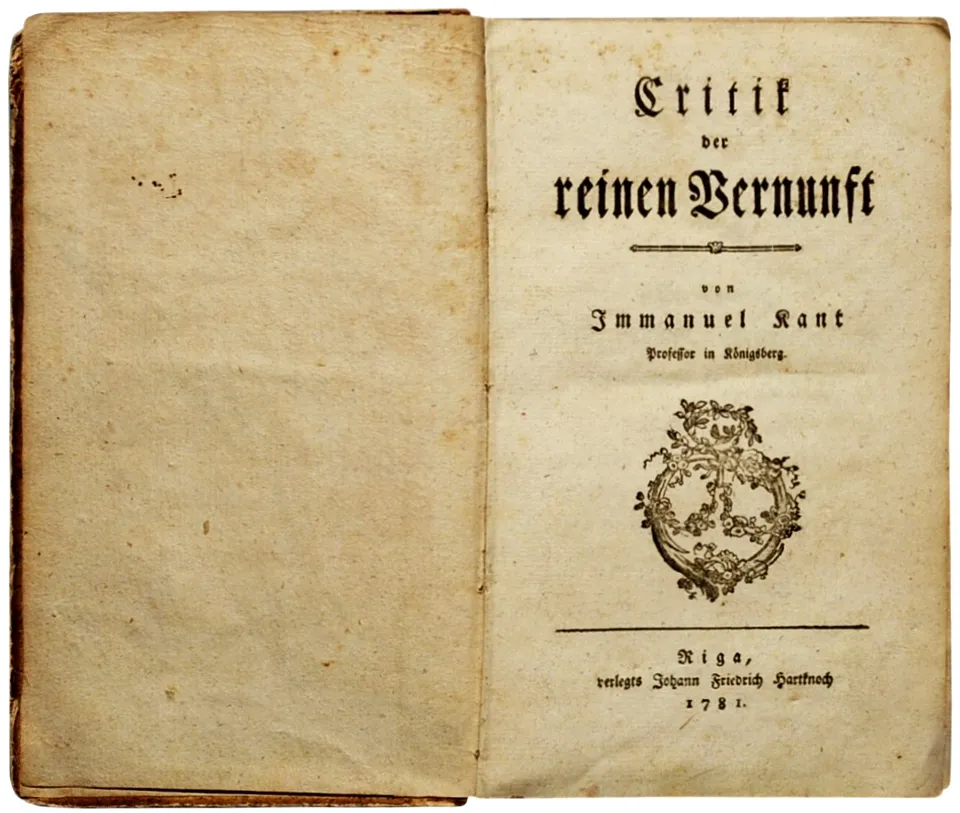
Reality as it is independently of our cognition — for Kant fundamentally unknowable; we only ever know appearances.
Kant's transcendental idealism distinguishes between the world as it appears to us (shaped by the forms of intuition, space and time, and the categories of the understanding) and the world as it is in itself — that which appears, considered independently of our intuition. Of the latter we can know nothing — we can only think it. Closely related is the noumenon, the object thought merely through the understanding; Kant often uses the two terms almost interchangeably, and their exact relation is disputed among scholars.
This limit is not a weakness but the point: it explains why mathematics and natural science yield secure knowledge (they describe the world of appearances), and at the same time it makes room for freedom and morality beyond natural causality.
Source: Wikipedia: Thing in itself