Immanuel KantLife · Work · Legacy
VIIWorks

The major works

Kant was 57 when he published the Critique of Pure Reason — then, within some fifteen years, one work followed another. Each writing has its own page here covering genesis, core theses and impact.

Every work page has a Kant decoder: a famous sentence (German original plus our close translation) that you unpack in three steps, from its frame through the key words to a plain-language version.

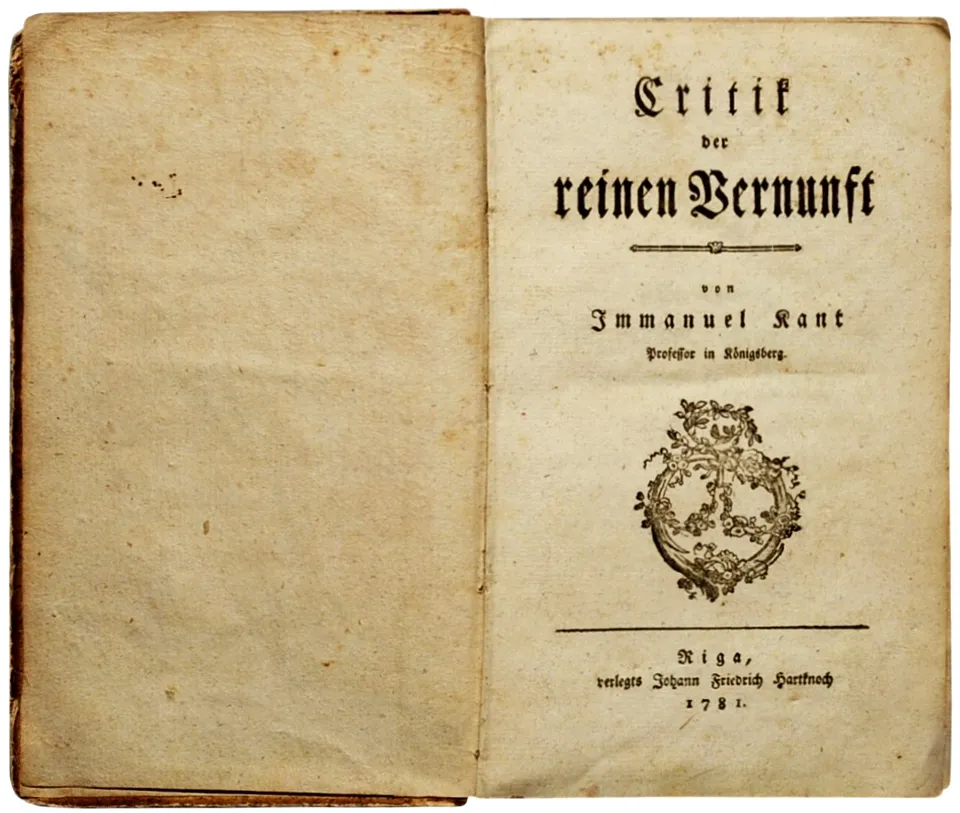
Critique of Pure ReasonImage: © Foto H.-P.Haack · CC BY-SA 3.0 · Wikimedia Commons
Critique of Pure Reason (1781)

The epochal work of epistemology: what can we know — and what can we never know?

Read more →

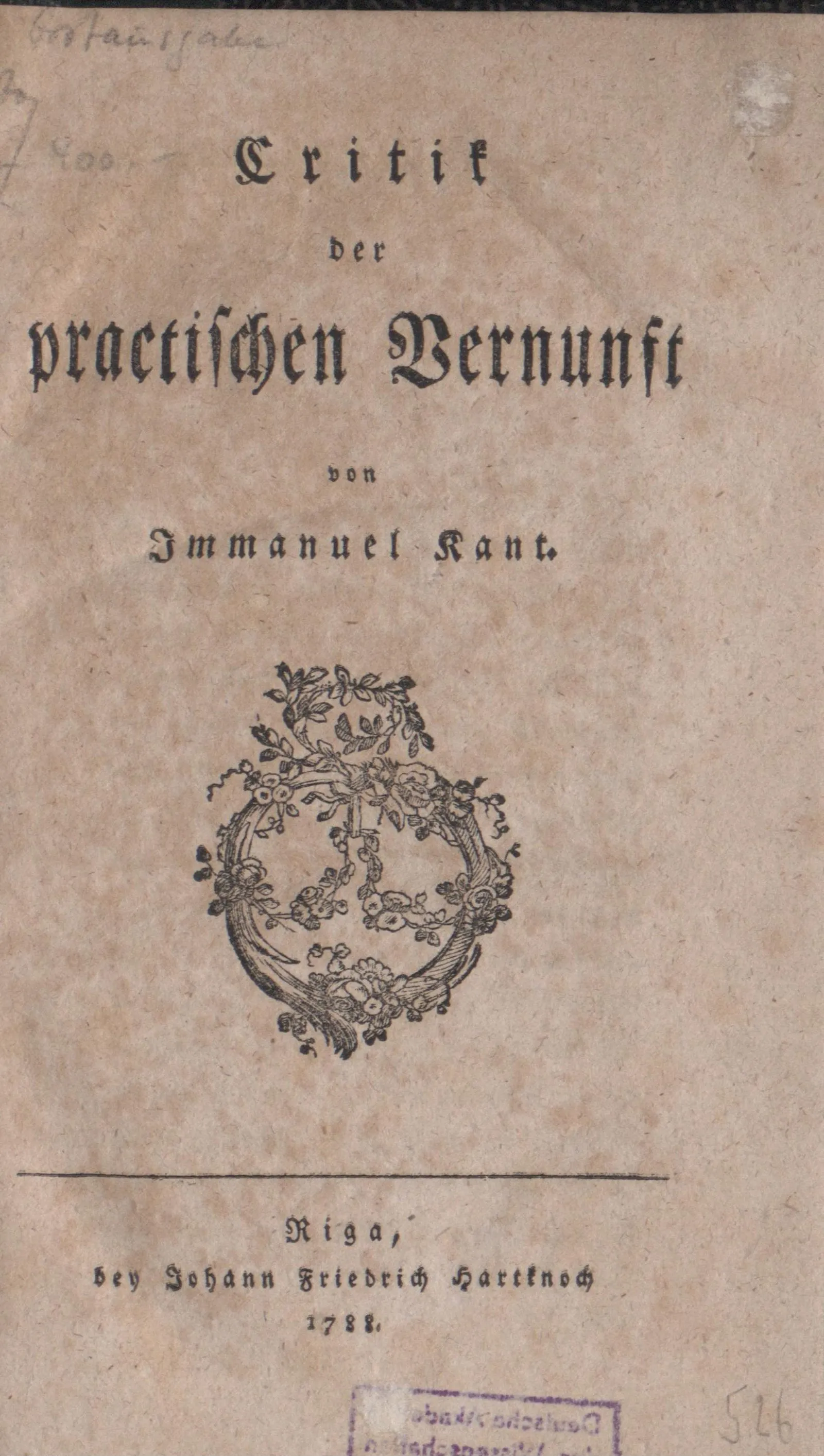
Critique of Practical ReasonImage: Immanuel Kant · Public domain · Wikimedia Commons
Critique of Practical Reason (1788)

Freedom, the moral law and the two things that fill the mind with awe.

Read more →

Groundwork of the Metaphysics of MoralsImage: Immanuel Kant · Public domain · Wikimedia Commons
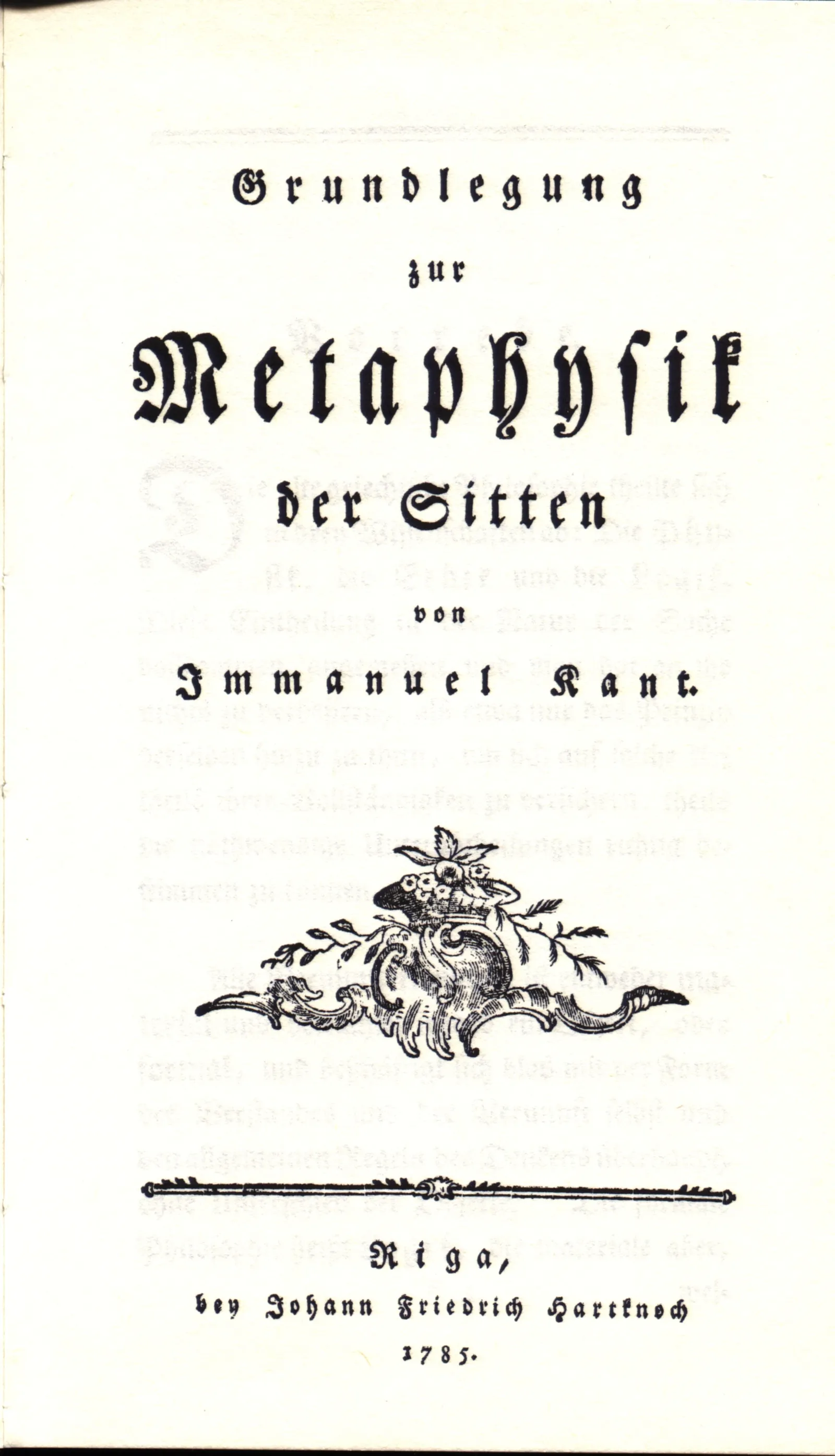
Groundwork of the Metaphysics of Morals (1785)

Home of the categorical imperative — one of the most widely read and discussed texts in ethics.

Read more →

The Metaphysics of Morals (1797)

Doctrine of Right and Doctrine of Virtue: Kant's worked-out system of law and morality.

Read more →

Perpetual PeaceImage: Kant · Public domain · Wikimedia Commons
Perpetual Peace (1795)

The philosophical sketch widely seen as a forerunner of the League of Nations and the UN.

Read more →

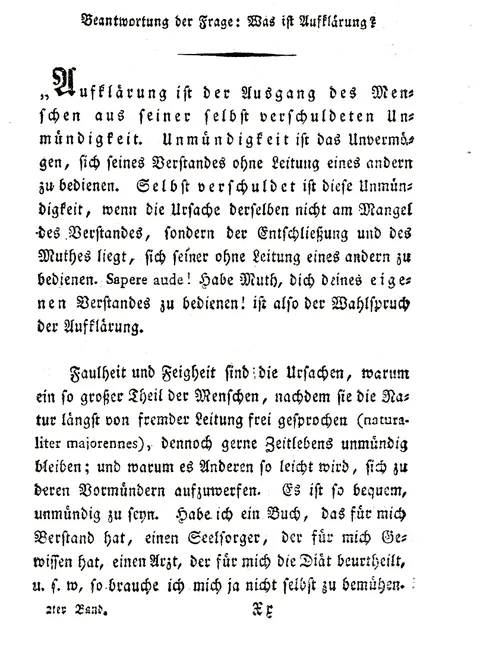
What Is Enlightenment?Image: unbekannt / unknown · Public domain · Wikimedia Commons

What Is Enlightenment? (1784)

Some ten pages that defined an era: sapere aude!

Read more →

The End of All Things (1794)

Kant's ironic, profound essay on eternity and apocalypse — written amid the censorship dispute.

Read more →

On a Supposed Right to Lie from Philanthropy (1797)

Ethics' most famous hard case: may one lie to the murderer at the door?

Read more →

Anthropology from a Pragmatic Point of View (1798)

From Kant's most popular lectures: the human being as a freely acting agent.

Read more →

Source: Wikipedia: Immanuel Kant (works overview)